
How to Get Court Records
Penny D. Mahone serves as Clerk of Superior Court. Official pages list her as Penny Dillingham-Mahone. Her office holds the Talbot County Superior and Juvenile records. Probate and Magistrate files sit with a separate Probate/Magistrate Court office. City and federal cases have still another keeper. Know the court before you send anything.
Channels include the clerk's online case and calendar routes, phone help, an in-person request, mail, and the GSCCCA certified-copy workflow. Email or fax may work in ordinary practice. But confirm the intake method for your division first. The clerk can tell you in one call.
- Identify the court, case number, and exact document.
- Search the public route or current calendar when appropriate.
- Call the custodian to confirm access, format, and current intake method.
- Submit the request online, in person, or by an approved written channel.
- Review the cost estimate and choose plain or certified copies.
- Check the delivered record for the requested case and date range.
Talbot Clerk Record Channels
The Superior and Juvenile clerk sits at 26 South Washington Avenue, Talbotton, Georgia 31827. Mail goes to P.O. Box 325. The published phone is 706-665-3239, and the fax is 706-665-8637. Call before you visit. The office may not offer a public terminal or same-day retrieval for every record type, and intake rules can vary.
Clerk of Superior and Juvenile Court
26 South Washington Avenue
Talbotton, GA 31827
Mail: P.O. Box 325
706-665-3239
The Probate office publishes 706-665-8866. Magistrate publishes 706-665-3595. An estate, guardianship, limited civil claim, or dispossessory request belongs with those offices, not the Superior clerk, even though all are Talbot County records.
Types of Court Records
A case file holds far more than its docket sheet. Ask for each item by its docket description and date. A request for everything just adds search time, copy volume, and cost.
- Complaints, petitions, accusations, answers, and counterclaims
- Motions, responses, signed orders, judgments, and decrees
- Indictments, sentencing orders, bond orders, and dispositions
- Summonses, returns of service, transcripts, and exhibits
- Notices of appeal, appellate records, and remittiturs
- Certified, exemplified, or electronically certified copies
Real-estate indexes and deed books run through a related clerk route. They do not replace a civil case file. In the same way, a calendar answers when a hearing is set, while the signed order answers what the judge actually ruled.
Talbot Docket Versus Documents
The docket is the control record, entered in order. It may name a complaint, motion, service event, hearing, order, judgment, cost, or appeal without attaching any of those papers. That gap tells you what to request. Was the case filed? The docket and complaint answer that. What did the judge order? You need the signed order itself.
| Question | Best record |
|---|---|
| Was a case filed? | Docket entry and complaint, petition, or accusation |
| What is the next date? | Current calendar plus clerk confirmation |
| What did the judge order? | Signed order or judgment |
| What was served? | Summons and return of service |
| What was appealed? | Notice, appellate record, and remittitur |
| Is the copy official? | Certified or electronically certified copy |
A single calendar row or search result is not the whole file, and it is never a certified outcome.
What a Court Record Contains
What is inside depends on the court and the case. Georgia Uniform Superior Court Rules 39.1 through 39.3 set out docket duties and the civil and criminal fields. The underlying documents carry the real detail: claims, evidence, and operative rulings.
| Case number | The unique action number, copied with all marks and suffixes. |
|---|---|
| Case style | The caption naming parties or the state and defendant. |
| Pleadings | Petitions, complaints, answers, accusations, and motions. |
| Service | Summons and filed proof showing service date and type. |
| Orders | Signed rulings, judgments, decrees, and sentences. |
| Appeal trail | Notice, transcript, record preparation, and remittitur. |
Sensitive material gets shielded in Talbot County court records. Exhibits, medical facts, financial data, juvenile identities, and protected addresses may be restricted or redacted, so a docket entry that is public does not guarantee access to every attachment behind it.
Talbot Historical Record Limits
The clerk's Historical Records Virtual Vault holds index books. It also holds grantee and grantor books, and deed books. The clerk warns that these digital records are informational only. They may be incomplete, may contain scanning or source errors, and are not certified. The official Vault explanation states those limits on the court's own page.
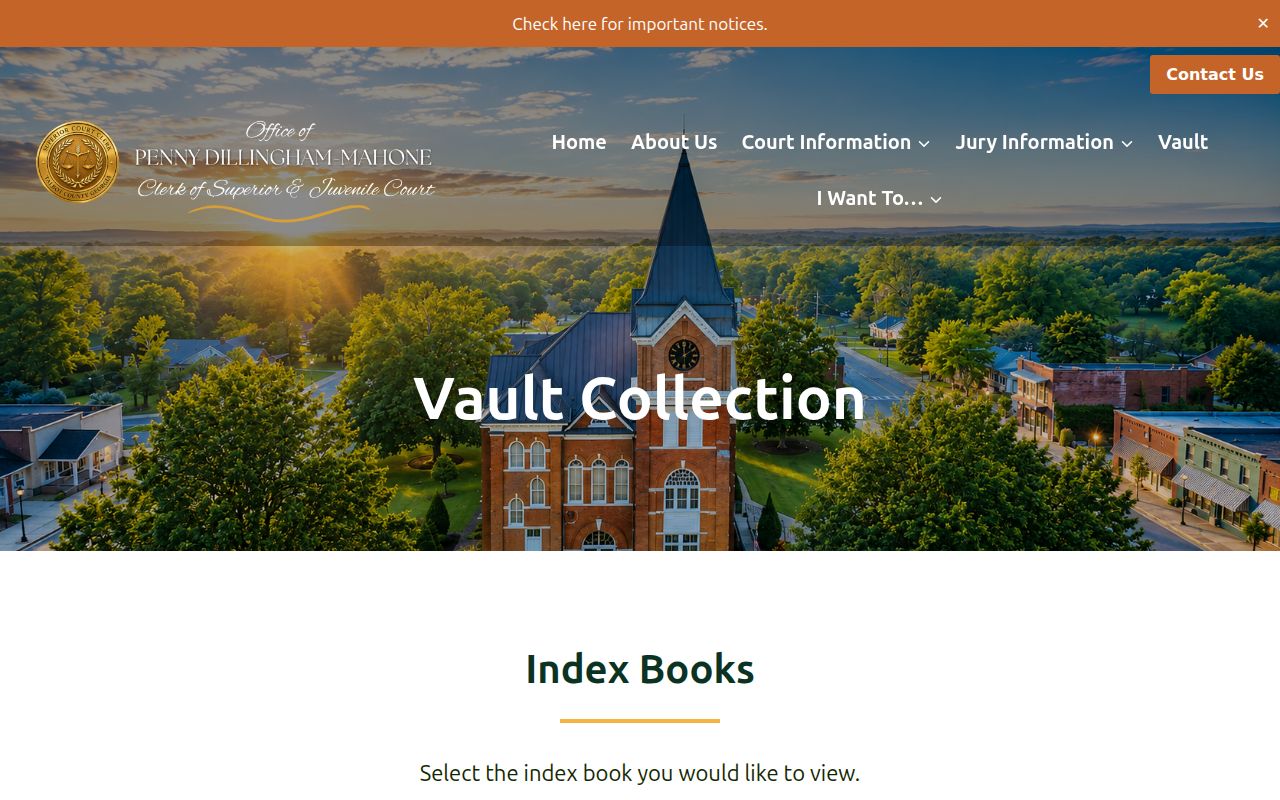
Use the Vault to locate an index or book reference. When you need formal proof, request a certified copy after that. A title instrument and a civil lawsuit about the same land stay separate records. The clerk also runs a forms route. The official forms page lists what the office currently offers.
Forms change, and the Vault screen can be locked. Confirm the current form and rule before you submit anything.
Certified Copies and Fees
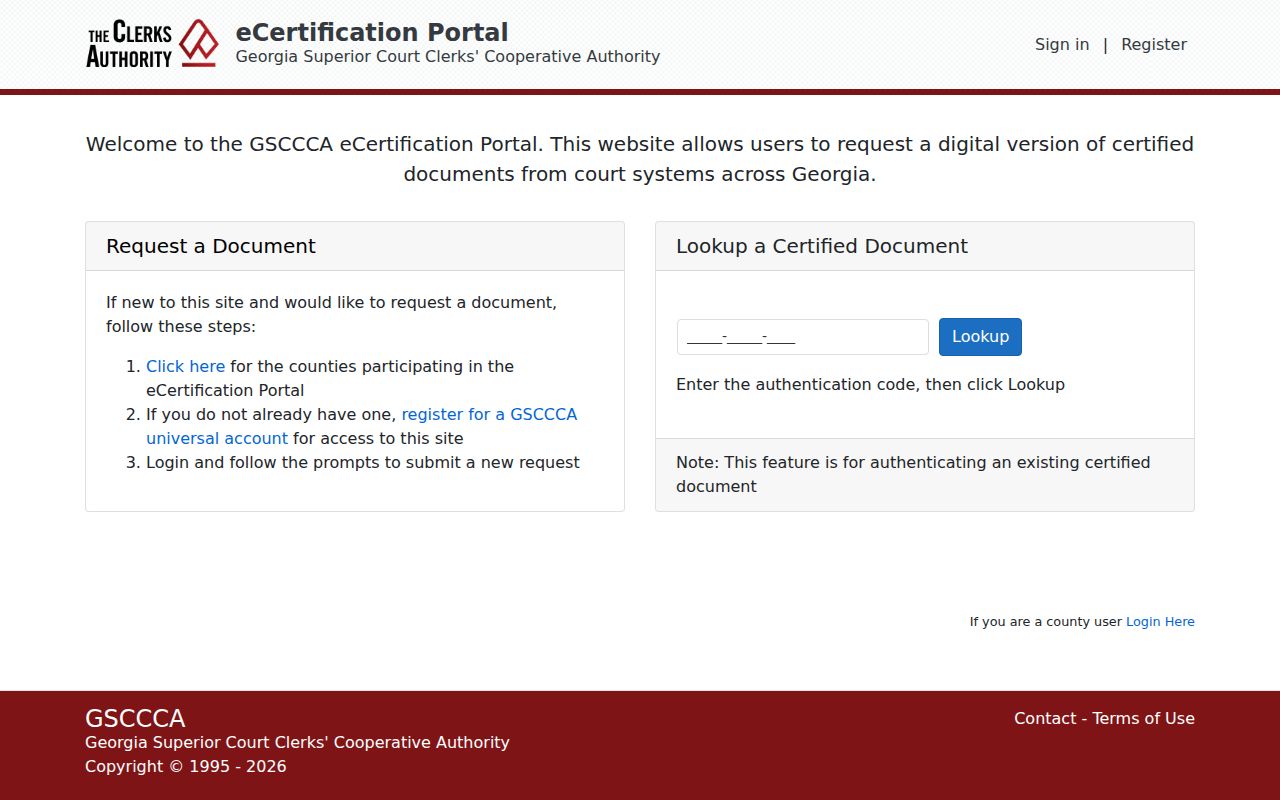
A plain copy just reproduces a record for information. A certified copy carries the clerk's authentication. eCertification is a purchase and delivery system, not a free docket search. You create an account, start a new request, pick the county and document type, fill in the required fields, and download the certified record you paid for.
| Item | Published treatment |
|---|---|
| Plain pages | Per-page charges appear in the court schedule |
| Certified pages | First and later pages have certification treatment |
| Seal or authentication | Separate schedule items may apply |
| Transcript or appeal record | Preparation charges differ from ordinary copies |
| Large request | Ask for a written estimate before work begins |
The local fee page warns that charges can change and cites O.C.G.A. § 15-6-77. The fee notice on that page states the current amounts.
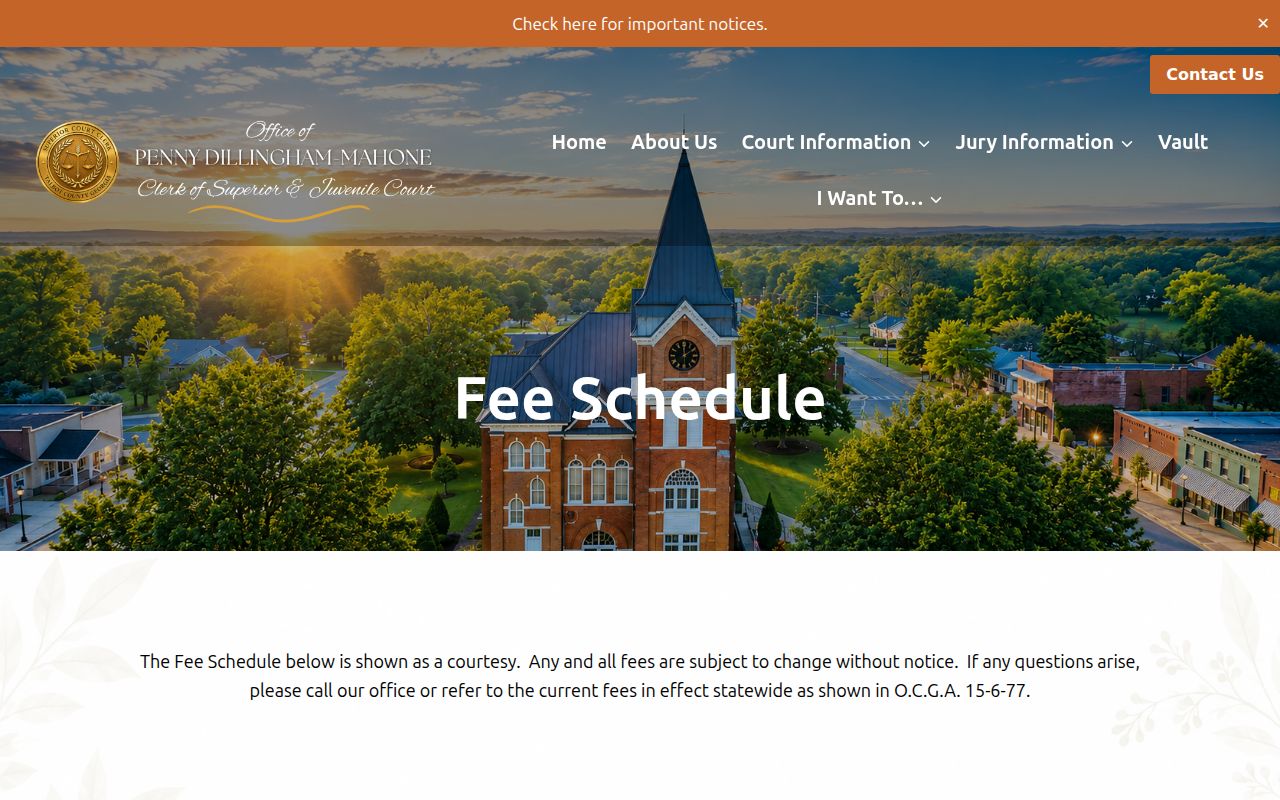
Check the current schedule before you budget a request. A free calendar PDF is never a free certified case file.
Talbot Electronic Certification Route
The clerk's certified-copy page routes court and real-estate requests to GSCCCA. The service runs around the clock. Office review and delivery still depend on the request and the record, as that page explains.
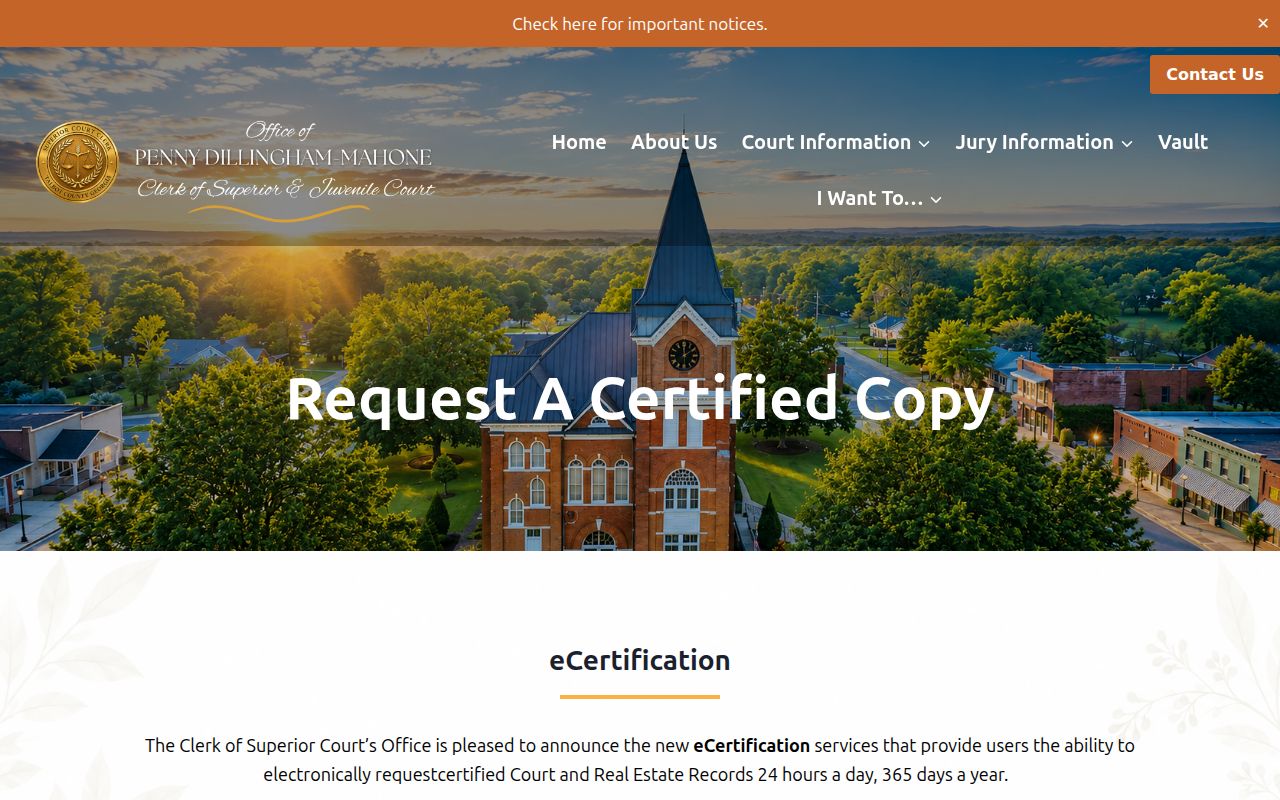
The local page sets the route; GSCCCA runs the account and request screens. Choose Talbot County and the correct document type. The GSCCCA eCertification service is not a general name search.
When the item you want does not appear, contact the clerk with the case number and docket description. Guessing a category gets the wrong record.
Public Access and Sealed Records
Public access is the default. Uniform Superior Court Rule 21 presumes public inspection unless a law or procedural limit applies. Rule 21.6 governs protected identifiers and redacted versions in certain matters, and Rule 36.17 makes parties and counsel limit sensitive data in their filings. Rule 39.6 gives adoption records special confidentiality, while Juvenile Court records require separate review.
Key rules:
Uniform Superior Court Rules 21, 36.17, and 39 govern access, sensitive data, and docket duties.
O.C.G.A. §§ 50-18-70 through 50-18-72 provide Georgia's general open-records policy, procedures, and exemptions.
An Open Records request cannot break a seal. It also cannot override a juvenile rule or a court-specific copy fee. Ask the clerk whether a public redacted copy exists, and request the non-exempt portion; the clerk can identify a restriction or sealing order but cannot overrule the judge.
Write a Talbot Record Request
Name a real record, not a general topic. A strong request to the Talbot County clerk lists the court, the full case number, the date range, and the specific item you want. That item may be public docket entries, return of service, a final order, or a remittitur. Ask about the estimated copying or certification cost, and whether electronic delivery is available. If any part gets withheld, request the legal basis and the public portion.
Georgia's Open Records Act calls for a response within a reasonable time and, when possible, within three business days. That clock covers the reply, not the paperwork. If production cannot happen that fast, the custodian should explain availability, timing, cost, or the legal basis for withholding. The response period is not a promise that records will arrive within three days. A court-specific certification process may follow a different workflow.
Check before you share. Sensitive details should not go out with the file. That includes Social Security numbers, financial accounts, full birth dates, medical information, protected addresses, juvenile identities, victim information, and sealed exhibits. Let the custodian apply the required certification and legal redactions.